Weightlifting Straps! What are they and how to properly use them?

Many pieces of equipment are used in weightlifting to add to the results. These equipment include different types of guards, belts, various types of straps and sleeves, and many varieties of braces, etc. Here, we will specifically talk about a necessary accessory for weightlifting, i.e., weightlifting straps. Keep on reading to find all about these straps and decide whether using them is worth it or not.
What are weightlifting straps?
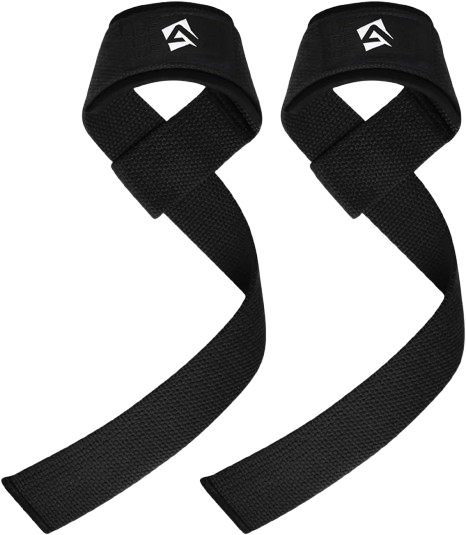
Lifting straps are a type of harness designed to help you lift heavy weights or heavy pulls. They're used to help you perform exercises that require strength and power, such as deadlifts, squats, bench presses, pull-ups, chin-ups, rows, etc. Wrist straps have an approximate length ranging from 12 to 18 inches and have a width between 1 to 1 and a half inches. They are normally manufactured using high-quality materials like nylon, canvas, or leather for durability.
What are the different types?
- Single Loop or Lasso straps
- Olympic straps
- Hook straps
- Figure 8 straps
Single Loop or Lasso Straps
Pros
These straps are most easily accessible & there is a wide range of variety available in these straps. You can choose multiple materials, from cotton straps to leather straps. Lasso strap is very secure and ideal to use for lifting.
Cons
- These straps are difficult to deal with, especially when wrapping around the bar single-handedly.
Olympic Straps
Pros
- These straps have a closed loop, which makes them easier to use.
- They are suitable to use in Olympic lifts.
Cons
- These straps have a less secure grip than lasso straps.
- It's not easy to adjust the tightness of these straps according to the size of the wrist.
Hook Straps
Pros
- You do not have to put yourself in the trouble of wrapping.
- A standard bar fits easily in the hooks of these straps.
Cons
- These straps do not allow you to have a tight grip on the bar, which may affect your lifting results.
- These straps are not suitable to be wrapped around special bars.
Figure 8 Straps
Pros
- These straps are very versatile.
- They are extremely secure & strong.
- They are made for heavy lifting like extreme deadlifts, shrugs, and reps.
Cons
- Not easy if you are pulling up weight and need to throw them far away.
What are weightlifting straps for?
The straps prove to be helpful when you have to carry out high pulls, deadlifts, and shrugs. The fundamental reason for using the lifting straps is added support provided by them. Straps also provide extra safety and protection to your hands and prevent injuries during lifting. This ultimately enables you to focus more on your technique instead of worrying about losing your grip or injuries. Straps are also very useful for strength training, especially while carrying out repetitive snatches and cleans.
Are straps good for lifting?
Yes and No! They are good if your lifting is being limited due to the grip and you are unable to hold the bar anymore. Like in the case of high-rep deadlifts where grip is very crucial and can be a limiting factor, lifting with straps can help you pull more reps. But if your lifting is not affected by the grip, there is no need to use the straps.
When to use the straps?
Straps are most appropriate to use for carrying out exercises that include increasing muscle size. Moreover, exercises that lead to the strengthening of your upper back muscles, trapezius muscles, and hamstring muscles are also suitable for using the wrist straps. This is because these straps enable you to lift extra weight by adding extra grip and confidence.
Exercises that are appropriate for using the straps ;
- Barbell rows
- Dumbbell rows
- Deadlifts
- Shrugs
- Rack pulls
- Romanian deadlifts
When not to use the straps?
Straps are designed to be used while strength training due to the support they provide to the wrist and hand. So anything other than that does not necessarily require the straps.
Secondly, if you are looking to enhance or develop wrist strength, then using the strap is not suitable. Weight lifting straps are only useful when you have to carry out a lift that allows gravity to work opposite to the lift. That's why they are not recommended for bench press or other such types of exercises.
How to properly wear weightlifting straps?
- Grab the terminal of the strap that has a hole in it and pass the open end through it.
- Pass it approximately 10 inches of the strap from the loop, this will make the strap turn into a big loop.
- Move your hand through that loop and adjust the tightness of the loop as per need.
- Align the long piece or open end to the lines on your palm so it's passing between your index finger and the thumb.
- Place your hand on the bar with the hanging part of the strap facing downward (that is, towards the strap).
- Now wrap the hanging part around the bar 2 to 3 times or as needed.
- Make sure to keep a distance of about 2 inches between your wrist and the bar.
What are the key benefits of using weightlifting straps?
- Help with lifting more weight, especially while pulling high reps
- You can enhance your grip strength by wearing these straps.
- Improve lifting focus & increase lifting confidence.
To sum it up!
A weight lifting strap is not something that one needs to use all the time while pulling weight. If you are new to the strength game and have weak wrists or forearms, then you should avoid these straps for a few months at least. Lifting straps don't actually make you strong, but help you lift more so they must only be considered support only.